

Beginner's Mind
- "How did you know how to dance with the crane?" - "I took a chance. That’s what kids do. Take a chance."

- “Why do you make music?”
- “Why do I make anything? Because I can.”
On a personal note…
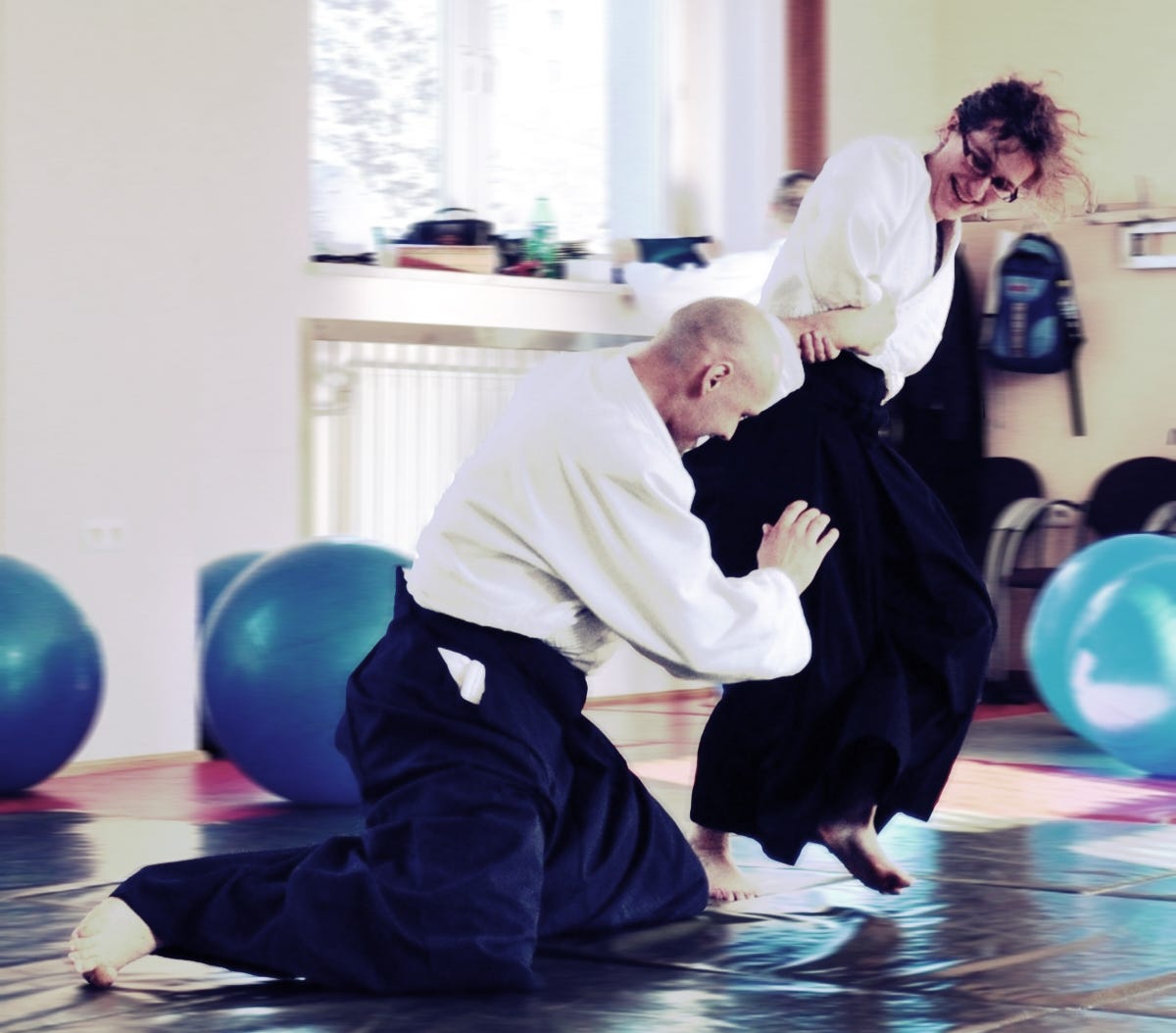
This essay is based on conversations with Tomek Kowalski, my good friend and long-time collaborator in life and arts. In that, it draws strongly from what Tomek says in part eight of our documentary series about the martial art aikido and its life philosophy (“Autumn dialogues about aikido: Aikido as art”) - in which he explores aikido not only as a martial art but as an artistic endeavor.
Lots of intersecting connections here. Aikido is how Tomek and I met. Our encounter prompted my return to creative practices - after I practically gave up in my teens, on account of “not being good enough” (oh yeah, I was a very different person back then). Twelve years into our friendship and the expanding multidisciplinarity of our continuous collaboration, I suggested making this documentary. Working on it is how I started my own journey into music making. Which, in consequence, gave Tomek a push in that direction too - when I invited him to tag along to a DIY-synth workshop last December. He dove so deep on his own into practice of play, I was astonished as to how musically innovative a (self-described) non-musical person can be. And so, it feels adequate to write about it now, as the debut release of our experimental project “Beginner’s Mind” goes out into the world.
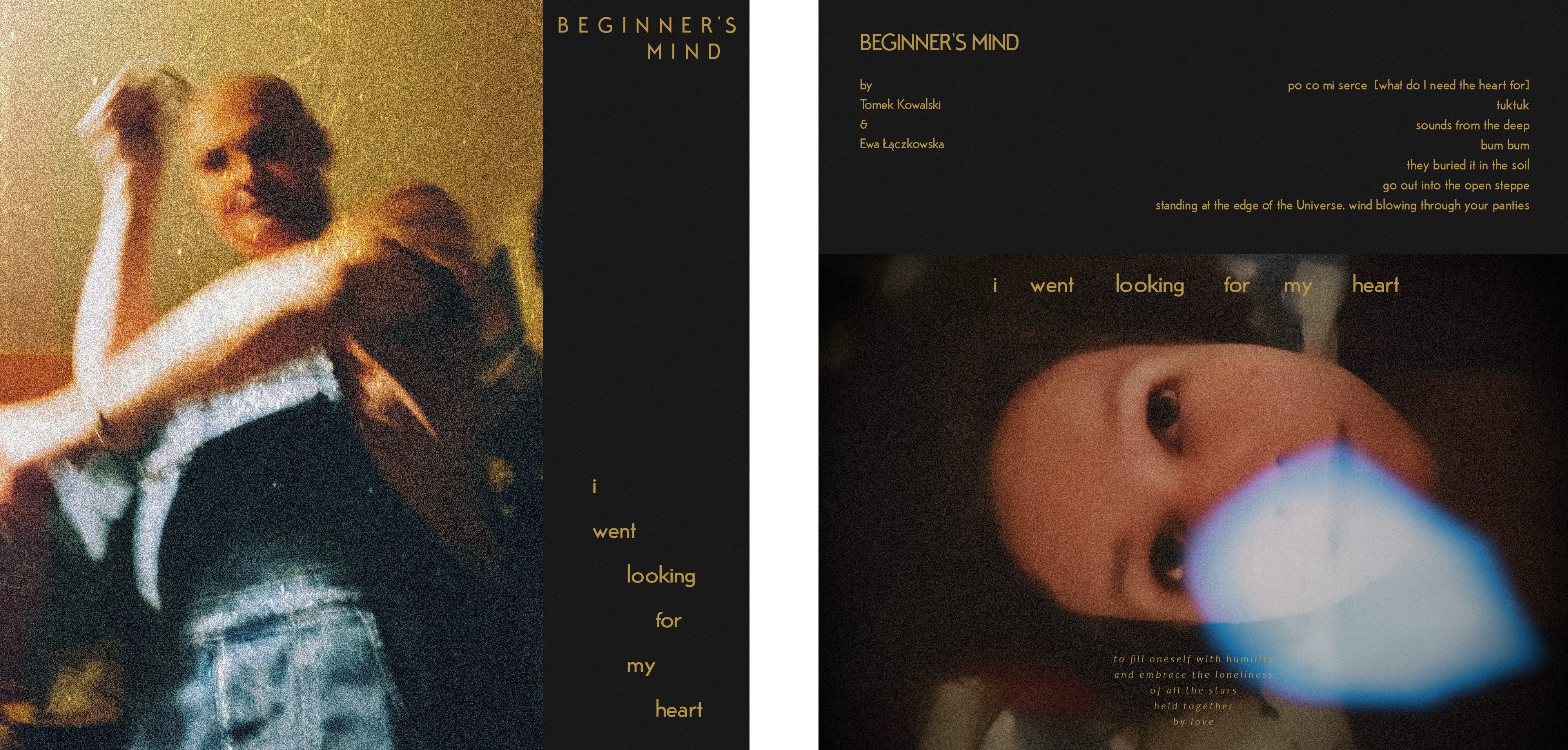
Our album “I went looking for my heart” can be found on Bandcamp - both as a digital release and a handmade, home-burnt CD album - including a handcrafted art booklet, with this essay and all the lyrics inside - and we are happy to send it to you.1


This album wasn’t supposed to be our debut. It arose from the deep without being called for, and in the process of emerging, it changed us both – in a good way. We hope it will do the same for you. Come and listen…
One half of this project has neither musical training (whether formal or informal) nor any training in playing an instrument. The other half studied a bit of music-making on the internet and still learns to play piano, while also looking for bravery to use her voice again to sing (yeah, that’s me).
But that’s not the reason we named ourselves Beginner’s Mind.
We chose it, because it’s probably the most important leading principle in creative practices - at least in ours.
And this is how this essay comes to be.
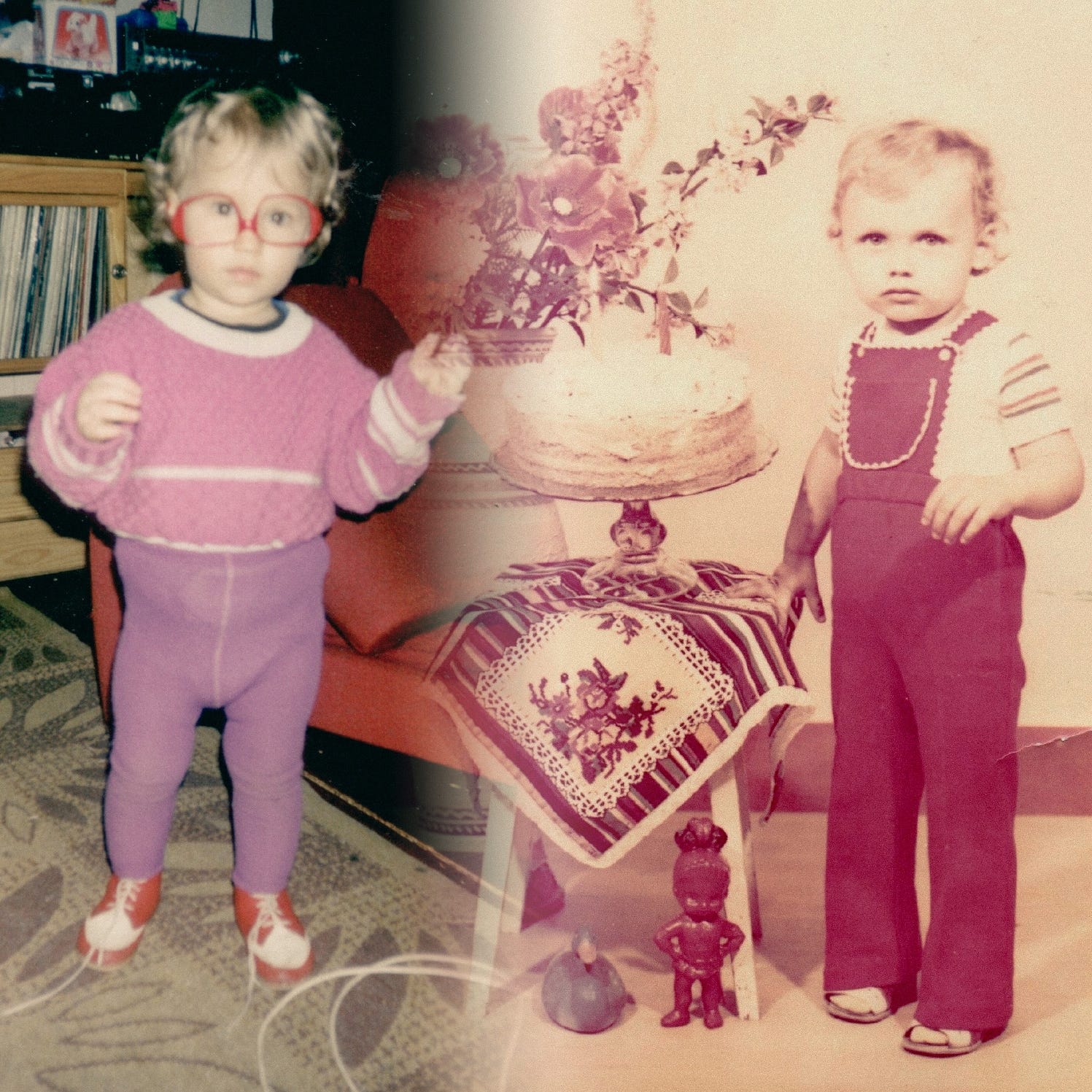
How can we describe the artistic process?
A beautiful way to think about it hides in the name of aikido itself. In our documentary, there’s a whole episode on what “aikido” [合氣道] means (part two, if you’re interested), but let’s synthetise it here:
合 ai - meaning “to meet, to gather; to connect, to fuse”;
氣 ki - meaning “energy” (as the foundation of Life - physically, metaphorically, symbolically);
道 do - meaning “the way, the path, the method”. It’s also the Japanese version of the Daò - as in Daò Dé Jīng.2 In that sense, Daò also means the whole Universe, and the main principle on which it works.
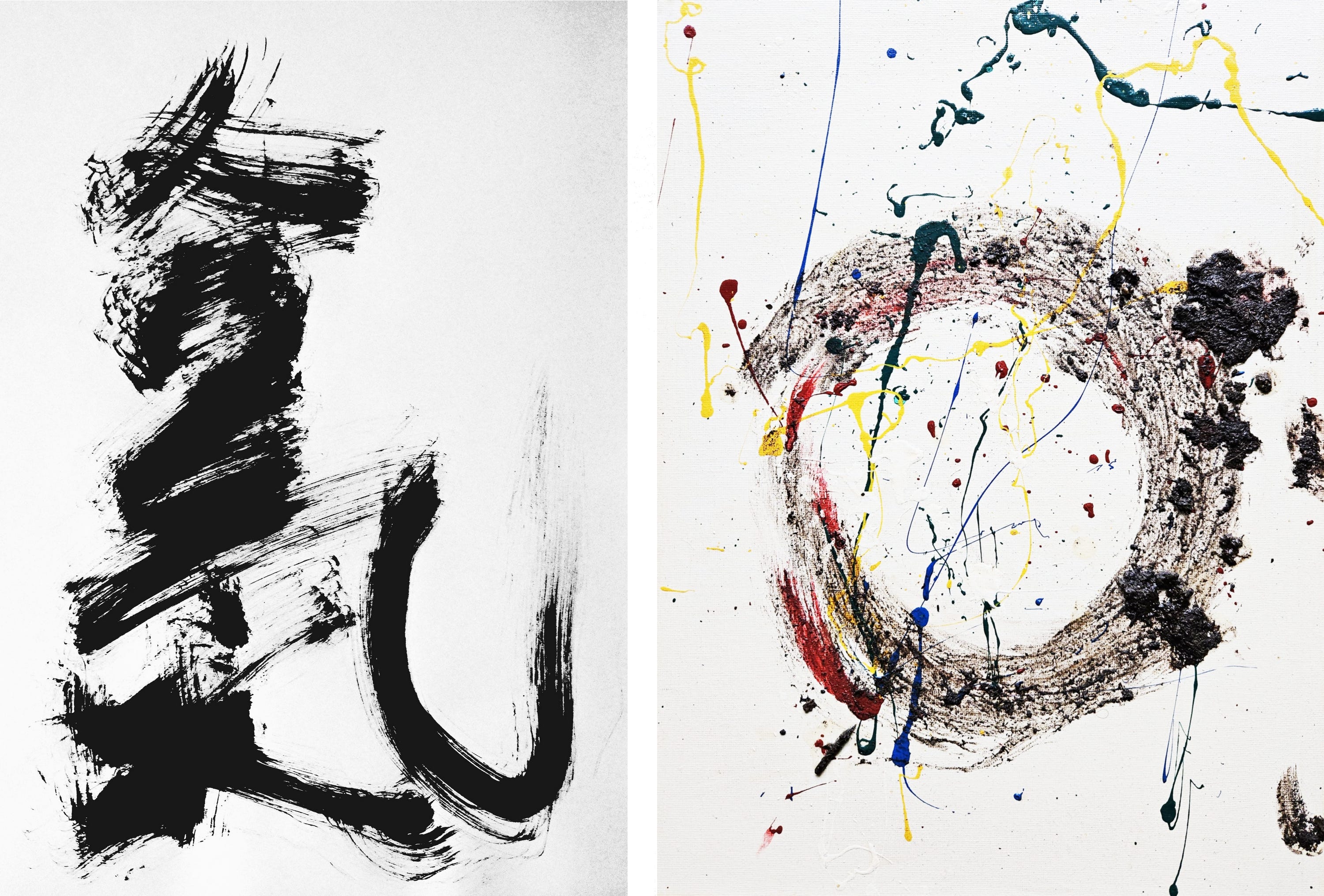
The message is simple: wherever two meet, there’s energy.
Two people. Two electrical potentials. A canvas and a painter. A piece of driftwood and a sculptor. An ear and a vibration that together create sound.
Where two meet, things come alive.
Aikido is a method of practicing that meeting. It’s aligning ourselves with and embodying the main principle the Universe works on. It’s a method for practicing becoming human being, as part of this world, with the rhythm of this world.3
It’s choosing deliberately to put ourselves in an uncomfortable situation, where our personal boundaries get crossed and blurred - in order to train the bravery of meeting and working with the world, however it comes, with complete openness towards it. It’s training ourselves in dealing with our fears and giving up our need for control. It’s a method of getting closer to who we are - beyond all our hangups and neuroses - so that the natural principles of the Universe can work within us.
It’s practicing towards becoming one with the balance of Life, its flow and rhythm, which is found in the constant movement of energy that arises in a meeting of a two: without control over what is happening, but rather being part of the happening.
Nothing other than art itself.4
What aikido as a method is teaching us is that we cannot truly meet another - whether human or non-human - if we come with a prepared plan.
Because if we enter that meeting with a concept, a set-in-stone idea, a conviction about how the world (and the Other) “is”, the meeting cannot really happen. We shut ourselves off from the possibility of an encounter. We leave no room for what the Other really is and what they bring with them.5
Instead of discovering the song hidden in the given moment, material, instrument, place, and using our hands to let it shine through, we violate the meeting to force it into our idea of what they should be. We cannot even really see what’s in front of us. All we see are our opinions and concepts about what people and things ought to be in order to satisfy us. Our judgments and convictions work like a stiff plastic foil we wrap the Other in.
And remember - each of those meetings happen only once. Not even once in a blue moon. Once in the whole wide Universe. And never again.
And yet, so often, in our obsession of making things “perfect” - that is, perfect according to our definition of it - we take away all the breathing room of what already is, for the sake of what it’s supposed to be. We deny the song of reality.
We do it because we’re afraid - of being rejected, of being judged. Afraid of precisely the same thing we do to everything else in order to drown that fear out.
Our head is full of concepts about what art, music, life, should be. About what is “good” or “bad”; what is “beautiful” and what is “ugly”. We have a template and a labeled box in our head for everything - with complementary unsolicited opinion and a running commentary of the always-frustrated inner critic.
It’s a good place to remember what Suzuki Roshi once said:
“In the beginner’s mind there are many possibilities, but in the expert’s there are few.”
- Zen Mind, Beginner’s Mind
The more rules and concepts about how the world should be, the less you’ll be able to see all the ways it can surprise you with. The less of its endless potentials will be able to get through to you.
Awe lives at the edge of certainty.
Beginner’s mind6 is a mindset that allows us to truly meet the world, without any preconceptions or preparation, in a fresh and open way - with the eagerness of someone who doesn’t yet know. It means nourishing the endless curiosity about the world and the numerous possibilities within the reach of our hands – without judgement or fear of failure. It’s a call for coming back to childlike awe with Life and all its gifts. It’s an invitation to play with it – for no other reason than the fact that we are alive.
A beginner’s mind is a childlike mind.
A child’s mind, when still untouched by social upbringing, is free of any definitions. A child embraces the world with open arms, because there is no fear in them: no fear coming from having an ulterior motive, a plan, a design that needs to be realised. A child does not see the world through concepts. They don’t yet have a map of the world. They are not prepared for it. They explore the territory - and with what hunger and wonder! They see the world through their eyes, they embrace the world with their arms, mouth gaped in awe. In all they do, they aim at getting closer to the world. So close one can taste it - often, literally.
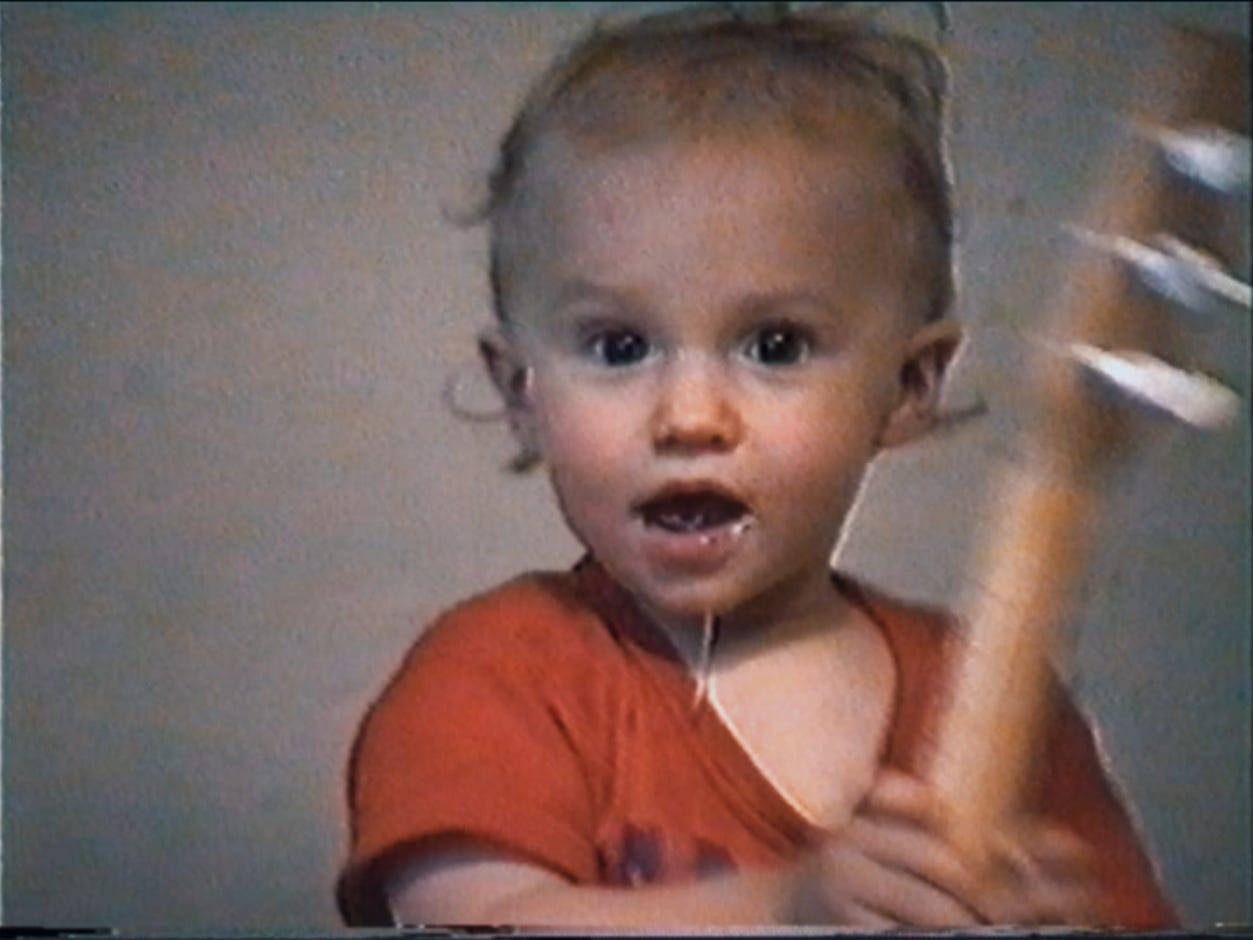
A child just is.
They trust the world. Completely. With no barrier or separation.
They trust Life. Without a slightest hesitation.
They love anything and everything in its path.
A child is, above all, ALIVE.
They come and get in touch with the human and non-human Other that crosses their path, without thinking and evaluating whether it’s “good” or “bad”, “beautiful” or “ugly”. And in that meeting, in that openness, magic begins to happen.
We’ve all experienced it; we’ve all seen it, and we all know how excited it makes us to witness this basic joy and openness in action. Rarely do we ponder on why we ourselves have lost it; why we gave up - and grew up.
Not that we got any more mature; we just got adult.
In order to embody beginner’s mind, we have to learn to see - in each moment, in each meeting, the potential for something new to emerge. Something beyond our definitions of the world, and beyond our fear. Beyond things we already know.
This is how our collab came to be.
After the DIY-synth workshop, we both came back with a handmade instrument, (including a piezo mic and a small amplifier) and lots of inspiration to make sounds. Seeing Tomek’s lit eyes, as he tested his instrument on the workshop mixer, I followed my gut feeling and lent him the very basic audio interface I already had. I provided him with the simplest digital audio workspace and three effect plugins, and left him to his own affairs. Pretty quickly, I got bombarded with recorded tracks. Tomek started buying used instruments for small money and experimenting more and more - playing on anything he found around his apartment. The question I asked him the most was: “What is that? What are you using to make this sound?” In response, he usually just smiled, like a child with a secret.
The more time he had, the more complex the recordings got. And I was thrown aback by the polyrhythms and surprising, brave harmonies and build-ups he was creating.
He was able to do things probably no trained musician would come up with, precisely because he had no idea about the rules. He didn’t know how to make music. He just made it.
It was fresh, it was innovative, it was utterly fascinating, it was something I have never heard before. And it didn’t pretend to be anything else than it was. He wasn’t trying to make music or to impress, he wasn’t trying to control anything, or force it to be something it wasn’t. He was just joyfully expressing himself.
And it was perfect: in its natural, raw imperfection.7
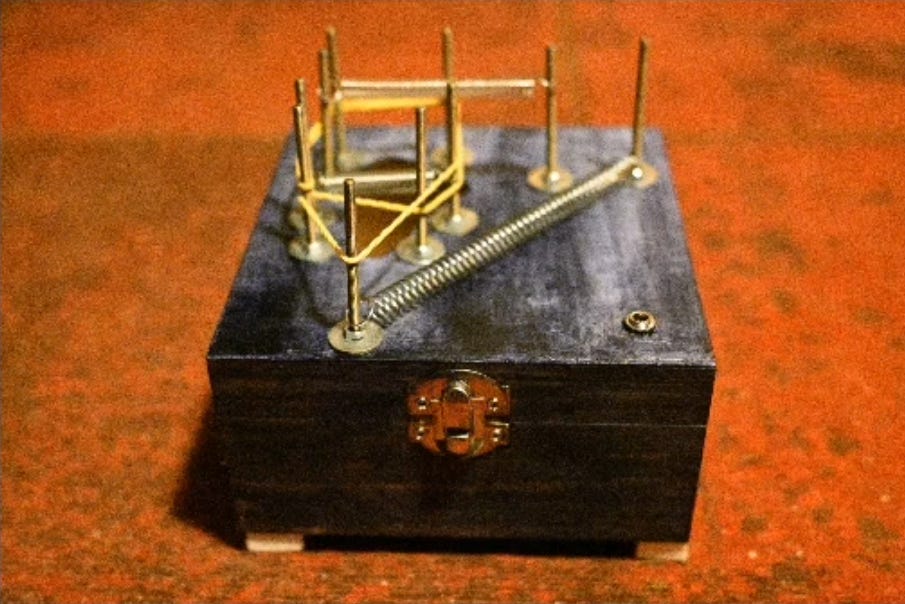
I took some early tracks Tomek made and started working with them further - but I couldn’t keep up with his productivity. Before I actually finished the ones I was working on, he already constructed a new bunch of full, stand-alone tracks on his own, which wanted to become a separate, themed album. Hence, our initially planned debut album got postponed.
And then, I got two weeks off work, with no plans and nothing in particular to do. So I started working with the complete tracks Tomek made. At first, I just wanted to mix them and create some more room for each sound. But the vibe they resonated with to the brim has affected me. I ended up re-mixing them, adding my own expression to them. And here’s the thing: because of how (fresh, open, innovative) they were, they affected my way of working with them. Never before have I worked so much with “first take, best take”. Never before have I loved the imperfections and happy accidents of my own recordings so much. The ideas just kept flowing out of me, and they all felt good. Not because they were perfect - but because they came out of the same spontaneity Tomek has brought into this process. I finished seven tracks in two weeks, with no second thoughts and no doubt.
There was real magic in it - magic that I felt deeply in my chest. My heart was opening while I worked, further and further. The resonance and emptiness I felt was almost unbearable. The boundless joy of Life, and awe, and love that was bigger than me, the madness, and sadness that could crack walls were pouring out - for me to see, again, for the first time, that all this has always been there. And it wanted out into the world.
The opening track of our album, with a music video:
But in order for something like this to happen, we need to constantly keep deciding to leave our comfort zone - and it’s not easy. As adults, we build and rely on our own schemas, the maps of how life works. We bring our world into being by assuming how it is, by expecting it to be this and not other way - whether because of our traumas, our past experiences, or the things we were told. All the time, we keep trying to chop up the fathomless, unexpected, brilliant, incomprehensible reality to fit it into our frameworks.
We deny the possibility of a true relationship with the world. We turn our backs to the whole world of possibility and creativity of what is already here.
We can see what is already here when we stop for a moment and observe children - children that take a stick in their hands and are able to see the whole world in it. They hear the song that the world sings to them through that stick. Ichi-go, ichi-e8 - one moment, one meeting. The world is here, now. And it’s yearning for us to meet it.
And this is also where creativity lives: because being in the moment means that there is no barrier between us and the world.
What comes is what we meet. There’s no restriction telling us: “this is stupid” or “that is cool”. We meet and we enter that meeting, without making any opinions about it beforehand, without being afraid to fail. There is no possibility of failure, if you get with the world. The world doesn’t fail. Even the most crooked branch is perfect in how it is, how it’s part of this world.
Our fear of failure is what cuts us off from getting with the world.
And again, in the beginning, children are beyond that fear. They don’t even really know yet how to use their legs - and still, they run. They run, because they have legs. Because they are alive. They might fall, but they cannot fail.
They are in tune with themselves, with what they can do. And through that, they are in tune with the world.
A child is, and just does. Because they can. Rooted in their nature, they simply express themselves, without ever thinking about opinions of others.
As adults, we are so dependent on our social worlds, on praise and yearning to “fit in”, that we rarely dare to step outside the collectively defined frameworks of things. We’d rather stay safe than, maybe, get rejected. All of our expressive efforts is focused on trying to get the world to “like us” and appreciate us. At least through all those hearts on social media. We hide behind the frameworks imposed on us, we put an act on, and we think we express ourselves. As far as we are allowed.
I don’t think it’s coincidental that we made “childish” into a pejorative. Because the way the child behaves is so much more free than we in our adult lives usually are.
A child doesn’t consider social obligations and codes of conduct. They don’t consider if they will make a fool of themselves, or if they will look stupid. When they want to dance, they dance - and in that, they don’t follow specific steps and rules. They just express themselves, and the joy that lives in their body. They just do. They wave their arms around, they wobble and jiggle and swirl, testing out the possibilities of their bodies and of their balance.
They also say “no” if they feel like “no” (and “yes” if they feel like “yes”). They express their emotions in public with no regard for politeness and behavior norms. And you won’t be able to convince them that career is something important and worth working your ass off to have.
You would also have a hard time to convince them an artwork is “good”, just because someone who made it owns a paper confirming their authority in making arts.
If you give them a brush, or a coloured pencil, they will start painting without thinking. If you don’t give them a brush, they will take a stick and poke around in the mud instead. They won’t care if they are any “good” at what they do, if what they do requires “studying a skill” or learning some theory. They simply DO; they create; they are in this moment. I mean, have you ever observed a child that is busy being creatively with the world?
“There is nothing to lose. There is only the constant pure quality of right practice.”
- Suzuki Roshi, Zen Mind, Beginner’s Mind
Children don’t have any doubt in them. They are not asking themselves: “ohh, but what will happen if I make a fool of myself? If I fail?” - at least as long as the adults don’t spoil them with their judgments and opinions. They don’t seek love or acceptance from the world, because they trust that it will be given to them. They trust that the wonderful world around them will provide them everything they need.
Because they carry that same love, awe for, and unconditional acceptance of the world inside them.
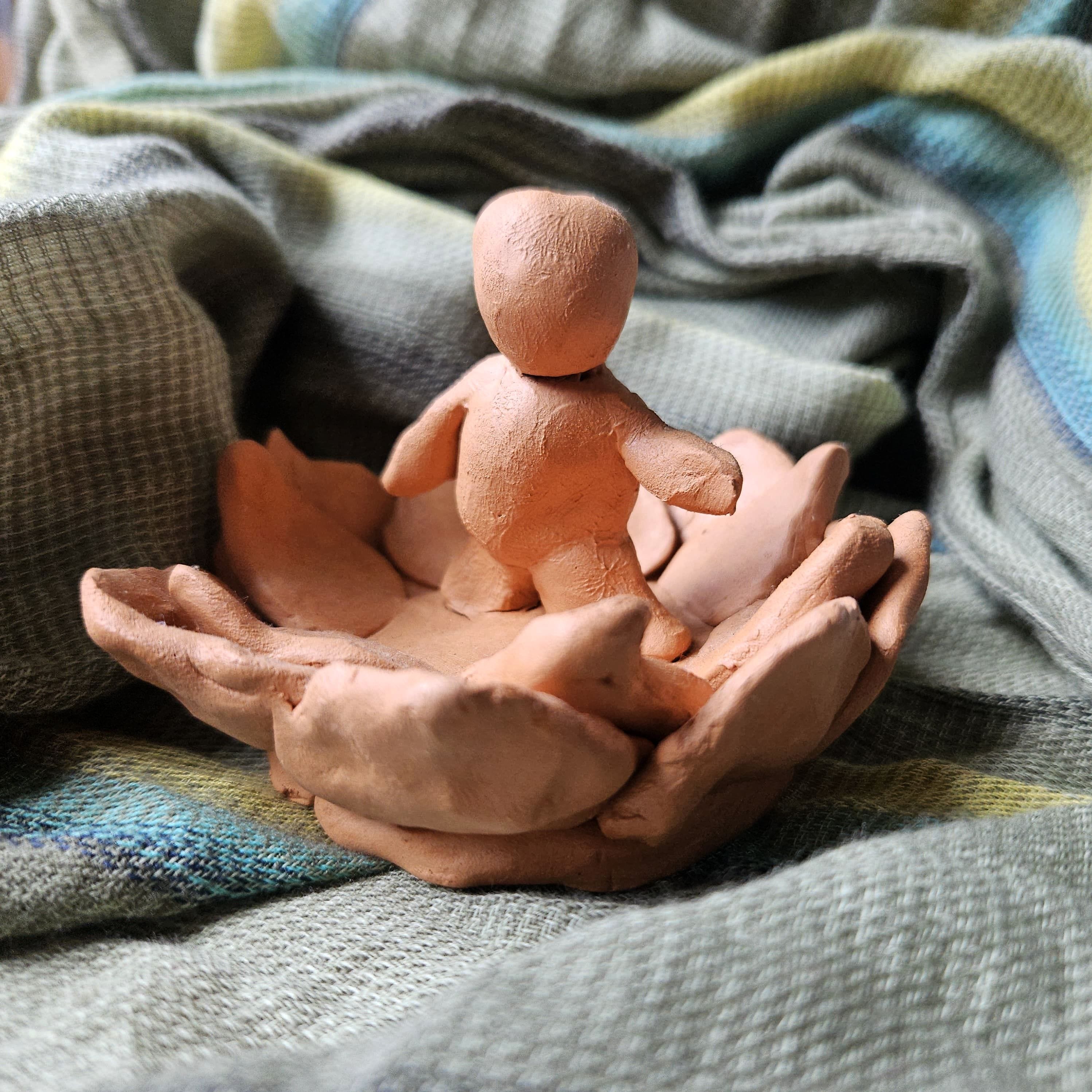
We must empty ourselves to be able to meet the world. We must leave all templates, definitions, and concepts behind, and be ready to enter what comes. Whatever comes.
And this requires dropping all our wishful thinking, all our judgments and definitions, and embracing being alive. Not being somebody, just being ALIVE.
“When we practice zazen our mind always follows our breathing. When we inhale, the air comes into the inner world. When we exhale, the air goes out to the outer world. The inner world is limitless, and the outer world is also limitless. We say ‘inner world’ or ‘outer world’, but actually there is just one whole world. In this limitless world, our throat is like a swinging door. The air comes in and goes out like someone passing through a swinging door. If you think, ‘I breathe’, the ‘I’ is extra. There is no you to say ‘I’. What we call ‘I’ is just a swinging door which moves when we inhale and when we exhale. It just moves; that’s all. When your mind is pure and calm enough to follow this movement, there is nothing: no ‘I’ world, no mind nor body; just a swinging door.”
- Suzuki Roshi, Zen Mind, Beginner’s Mind
So, the task is to keep doubting our maps. Keep questioning them, and testing them. And we can only do that if we dare to step beyond the familiar.
Yes, as we grow with what we practice, we learn the skills, and we get to know the foundation of our medium. We learn its character and its qualities - not “rules”, but the innate principles of how the medium is in this world, and what kind of relationship we can build with it. However, the goal of all this learning is to, at some point, leave all this behind.9 The skills enter our body, and they stay with us on our journey - but the ultimate goal is not to be skillful. The ultimate goal is to find ourselves - and through that, the way back to our relationship with the world.
In that, fixating on the level of skills can become more of a hindrance than help. In perfectionism, we are alone. In perfectionism, we keep disregarding the world and our relationship to it.
But the more we are in ourselves, in our core being, connected to the flow of Life, the more creative we are - spontaneously and naturally. Because then, we can find creative potential in any meeting with the world - and we are able to listen to what the world is telling us. Then, the rules stop mattering, and without noticing it, you enter innovation.
You find your own voice, in your own dialogue with the world.
“Each of us must make his own true way, and when we do, that way will express the universal way. This is the mystery. When you understand one thing through and through, you understand everything. When you try to understand everything, you will not understand anything. The best way is to understand yourself, and then you will understand everything.”
- Suzuki Roshi, Zen Mind, Beginner’s Mind
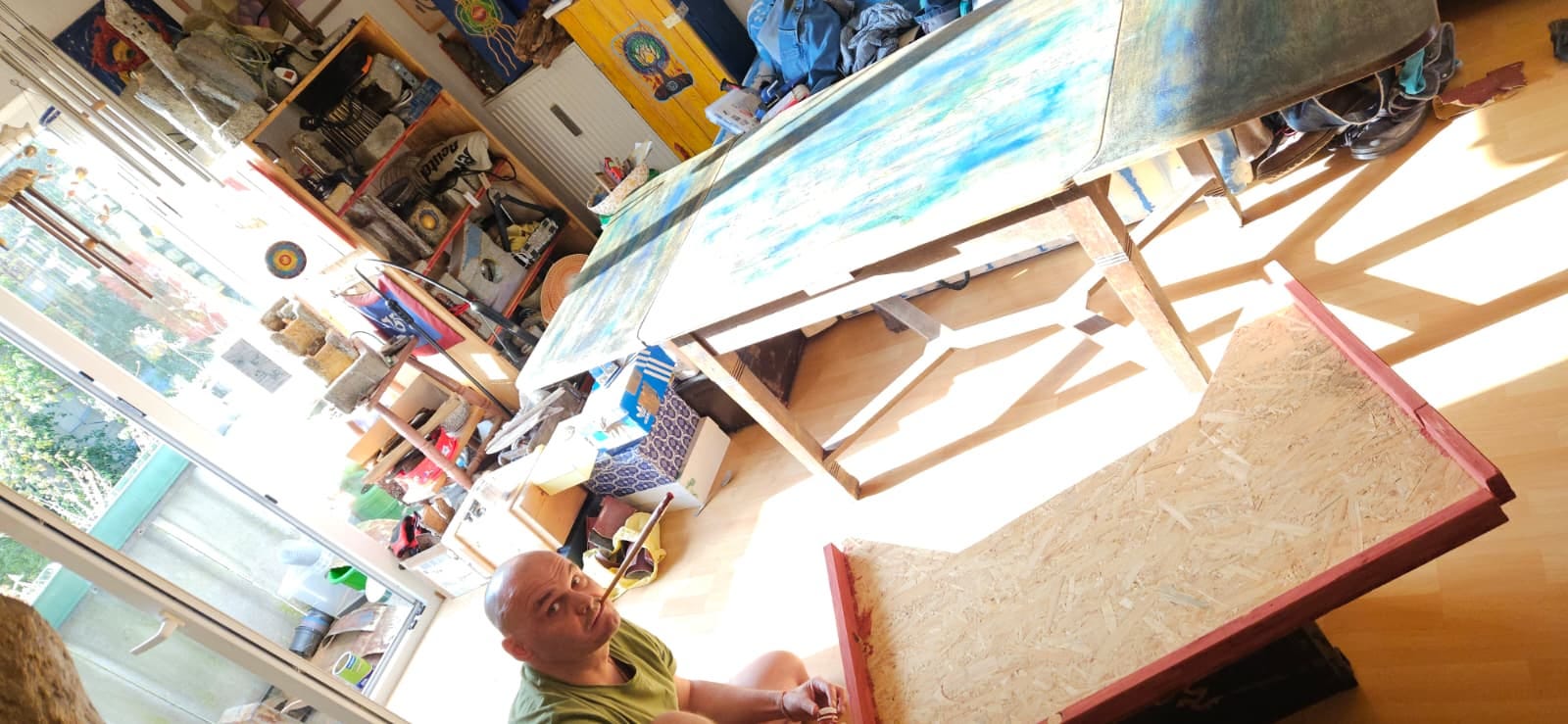
If you asked Tomek how he composes his music, he’d say he doesn’t compose. He constructs it. Like he constructs his paintings, his concrete objects, his poems. His creative practice is rooted in working with what is at hand; simply bringing things together and letting the processes go their own way, without controlling them. He aims at being surprised by the work. Always, he seeks the root of things: the perfection that realises itself in imperfect material; often in one that has already been thrown away.
If you asked him, what kind of artist he is, and what he’s trying to say through his art, he’d answer: “I don’t know.”
And that “I don’t know” is so important. As Alan Watts would say, that “I don’t know” is the same as “I love”; “I let go”; “I don’t try to force or control”. It’s the same thing as humility..
Tomek just enters a process that unfolds in front of his feet, and then, he follows it.
With a curiosity of a madman - or, a child.
This is what I keep learning from him, every day.
Working with him is like witnessing a child who is able to create a whole world out of a stick.
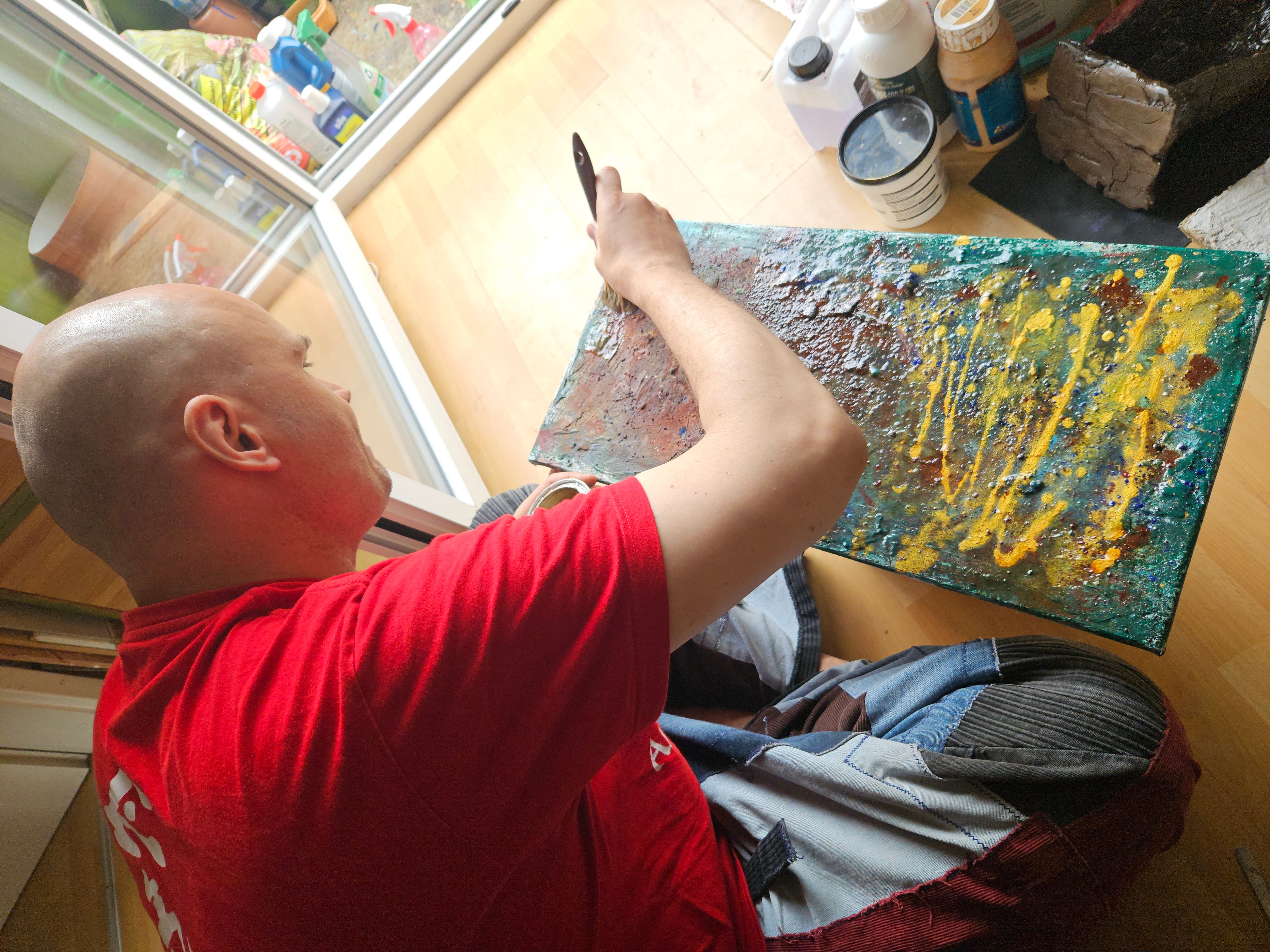
I didn’t intend to write this much. So I want to end with a reminder, that it all doesn’t matter that much. What matters is practice. What matters is awe. What matters is joy found in playing. The smell of the woods after rain. The bug crossing your path. The way a passing car splashes the puddle on the street. Singing and dancing for no reason whatsoever, except that the sun is up. Playing an instrument not because you know how, but because it’s there, right in front of you.
Just ask a child.
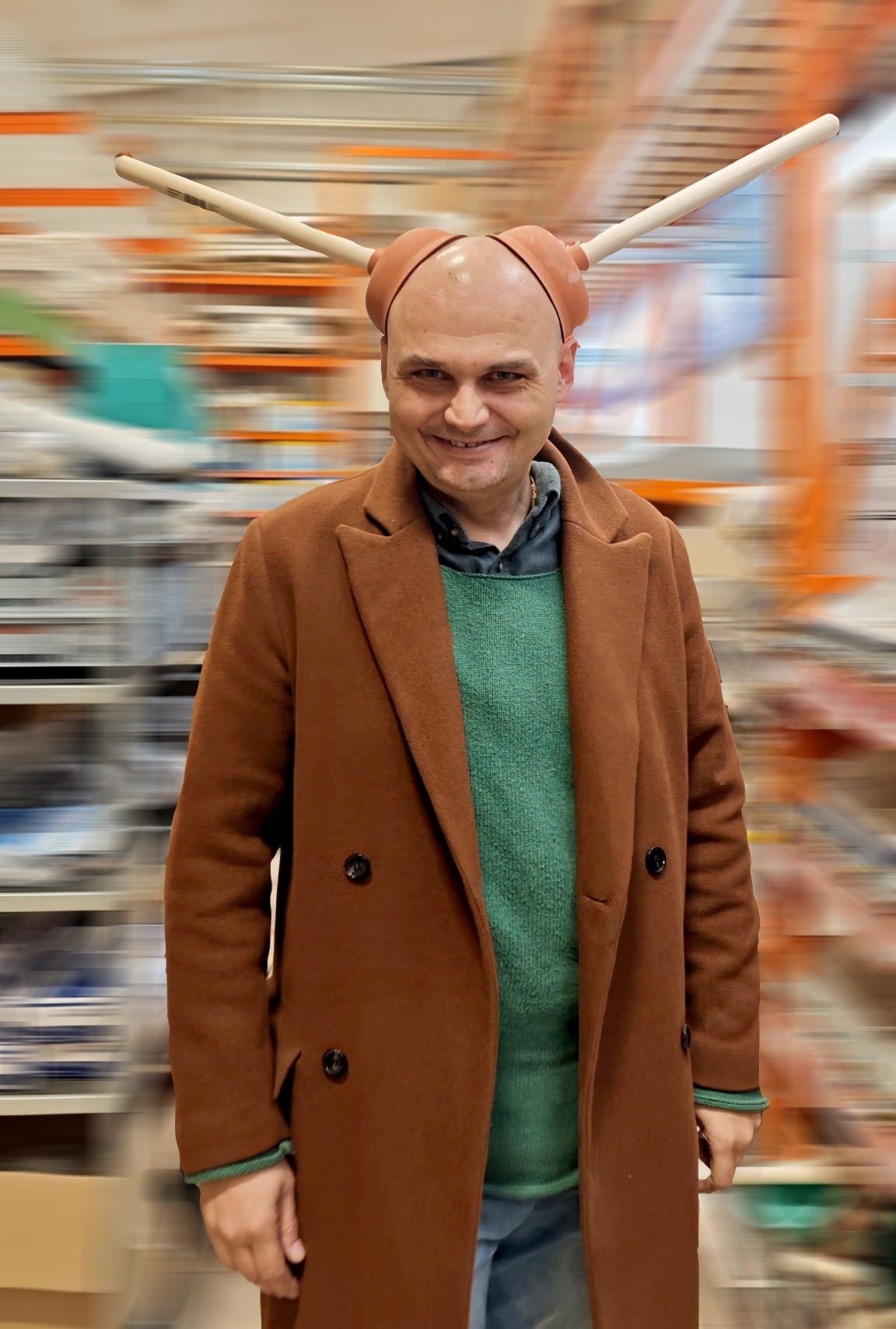
“We must have beginner’s mind, free from possessing anything, a mind that knows everything is in flowing change. Nothing exists but momentarily in its present form and color. One thing flows into another and cannot be grasped. Before the rain stops we hear a bird. Even under the heavy snow we see snowdrops and some new growth. In the East I saw rhubarb already. In Japan in the spring we eat cucumbers.”
- Suzuki Roshi, Zen Mind, Beginner’s Mind
- How did you know how to dance with the crane?
- I took a chance. That’s what kids do. Take a chance.
P.S.
If you want to explore other wonderful art and design objects Tomek creates, out of found and invented things, concrete, and rust - you can discover his work here.
That is, if you don’t live too far - we are currently only shipping to EU / EEA countries. But if you don’t live in Europe and still really really want it, talk to me. We’ll find a solution.
The foundational teachings of daoism.
I really think the documentary series I refer to here is not only for people interested specifically in aikido - because aikido is just a method, but underneath it, it’s always about Life. At least in our understanding. In fact, the best feedback we’ve got on this was from people that don’t have much to do with martial arts.
As I wrote before here:

Beginner’s mind is a notion we get from zen - the Japanese shoshin (初心), taught by Dōgen Zenji and popularised by Shunryū Suzuki Roshi, who I quote extensively here.
Another wonderful Japanese concept: wabi sabi (侘び寂び). I talk about it in the behind-the-scenes video we made about our aikido documentary series.
And yet again, we land by Japanese notions. Ichi-go ichi-e (一期一会) is used a lot within the aikido framework. I wrote a poem about it once, which became a song, which got released on the OPIA Community Compilation.
Tomek talks about this in a deeper way, explaining the path of a student with the Japanese notion of shuhari (守破離), in yet another episode of our Autumn dialogues about aikido.
really enjoyed this!
I can feel the vitality in it.
This shines through:
"Never before have I worked so much with “first take, best take”. Never before have I loved the imperfections and happy accidents of my own recordings so much. The ideas just kept flowing out of me, and they all felt good. Not because they were perfect - but because they came out of the same spontaneity Tomek has brought into this process. I finished seven tracks in two weeks, with no second thoughts and no doubt."