

Intro: Why are encounters always shifting, why are embodiments always perilous
... and why does it matter to talk about it.

The map is not the territory.
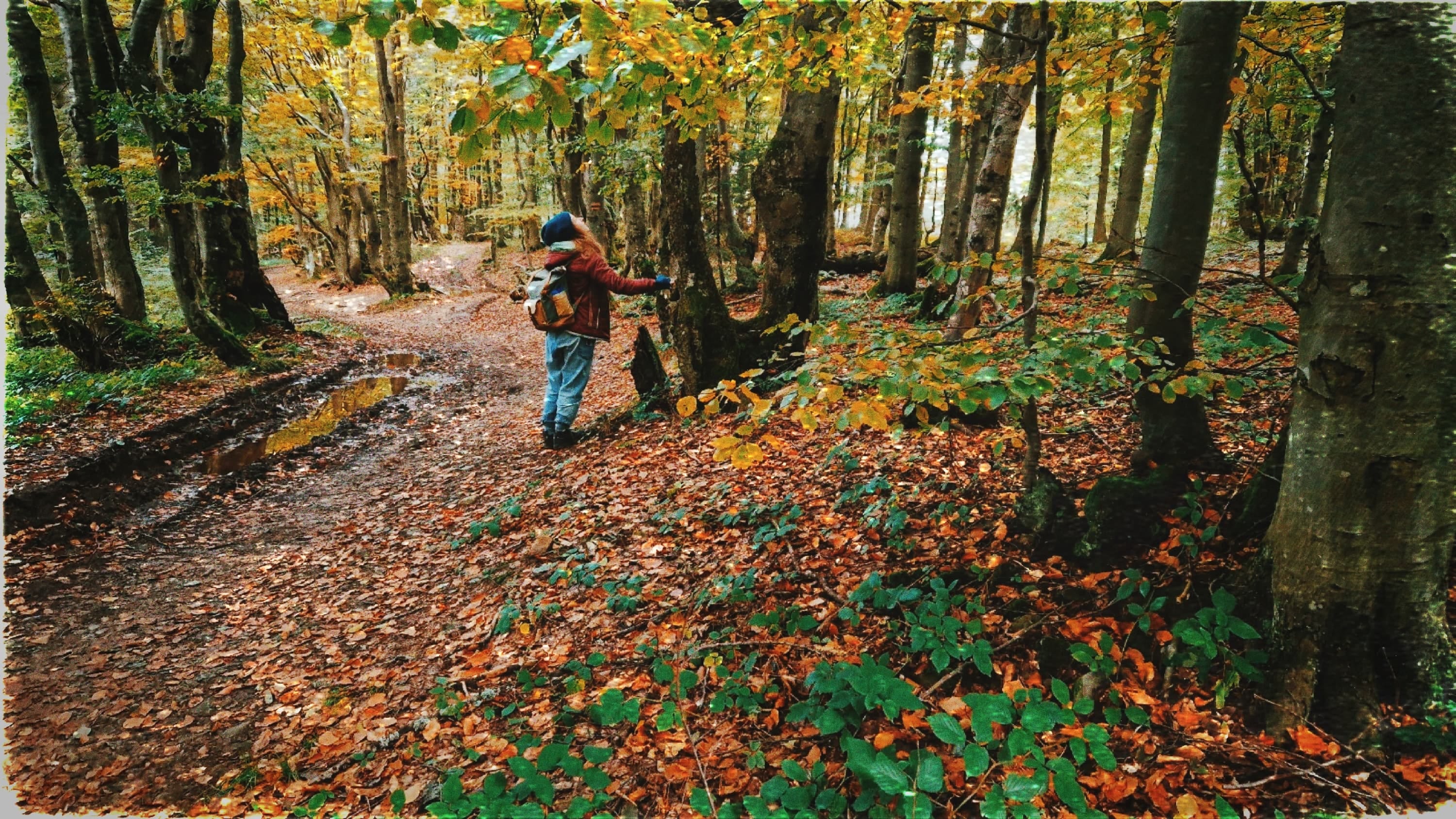
You might be walking down a street in a busy town, or treading barefoot on the soft, moist moss after the long awaited rain. You might be talking to your best friend on the phone or writing down your thoughts in a journal while your coffee gets cold and the night gets older.
No matter what you do: in each second of every moment, you’re in constant intimate entanglement with everything around you. Photons that originated in distant starts millions of years ago hit your eyes and get absorbed by them, triggering electrical impulses that become images. Molecules enter your nose as you breath in, reaching the scent neurons - the only ones in our body which are bare and directly exposed to the surroundings - and let you smell the world. Acoustic waves, produced by the explosion of Life around you, constantly play on your eardrums.
We are swimming in a sea of waves, molecules, electromagnetic fields. We generate some ourselves.
At the same time, fifty trillion cells that compose your body are ceaselessly moving, interacting, communicating - creating a synergy of the experience that is, roughly summarized - you.
… can you feel it?
This entanglement with the human and non-human life (and non-life, depending on where you start to differentiate) is always in motion and constantly shifting.
Movement is the fundamental quality of being alive.
Only a fraction of this constantly changing abundance of happenings reaches our rational, linear consciousness. Necessarily so: anything that works in a linear way demands reduction. And this is fine, as long as we realize that the maps we make of the world are just maps. They’re not the territory.
There are more adequate maps, and less adequate maps. And adequacy doesn’t always have to do with clarity. Because clarity often stands in stark opposition to the vast complexity of reality.
Do you feel lost already?
Well, you’re not, at least not completely. There is another part of our brain, which is much more attuned to receiving and understanding multiplicity, contradictions, and the entanglements. It’s the one beyond language - the “irrational” one, able to think in big-picture-terms. It’s the part of us that is always in the present moment, in ultimate attunement to our somatic, multifold presence of the constantly shifting aggregate of our body.
And it’s the one that actually keeps us alive.
Embodiment - meaning, intentionally and authentically building a relationship with the silent language of sensations - helps us to get in touch with the vibrant connections all around you and in you. It helps us feel and understand what is actually going on. It helps us learn and find ways to communicate our knowing - on a level that goes deeper than words.
The experience of your body is always in motion. It teaches you how to live with uncertainty, in this moment, as the animal you are. It carries you back to the knowing that isn’t based on our maps of reality, but is rooted in our experience of the territory.
This knowing might seem a bit foreign to the modern human, but that is ultimately the most intimate way of knowing of our immediate environment, and hence, our world. With Tim Ingold, it’s about
"moving about in it, exploring it, attending to it, ever alert to the signs by which it is revealed. Learning to see, then, is a matter not of acquiring schemata for mentally constructing the environment but of acquiring the skills for direct perceptual engagement with its constituents, human and non- human, animate and inanimate.”1
But entering an embodied relationship with the world is perilous, because it’s going to put you in a space in which you don’t know anything for sure.
Where things that appeared to have solid shape and structure dissolve in the myriad of sensations. Where you start doubting the certainty of your world, your definitions - and ultimately, your own identity. Because when you actually feel, with every breath, from your gut that everything is shifting, multiple, uncertain, and more complex than you think - you stop being able to contain the world to its definitions and concepts.
And since our societies are built on definitions, concepts, and fixed patterns of acceptable behavior and communication, you stop being compatible with societal norms of doing and thinking.
You might feel a bit alone in this.
But my experience tells me that it’s worth the risk.
Artistic practice can be a way of going beyond our maps and getting acquainted with the sensual.
And when I say “art”, I mean in the broadest possible sense - that is, any activity that channels your creativity in expressing who you are in connection to this world.
And yes, in my experience, this is intimately connected to embodiment.
Like so many other things.
Unfortunately, what “art” means, what counts as “artistic practice”, and what motivates us towards “being an artist” nowadays has been muddied in our commercialized, appreciation-addicted world. And this has ramifications - for what we think we know, who we think we are, and what we do with all that.
More on that to come.
Recommended reading for today:
David Abram (2017) The Spell of the Sensuous: Perception and Language in a More-Than-Human World. New York: Vintage Books.
Tim Ingold (2000) The Perception of the Environment: Essays on Livelihood, Dwelling and Skill. London and New York: Routledge.