

Where does your knowledge reside?
“I know it in my gut.” “I know it in my bones.” I've never heard people say, “I know it in my head” - just "I know", as if knowing in your head was obvious. But is it, really?

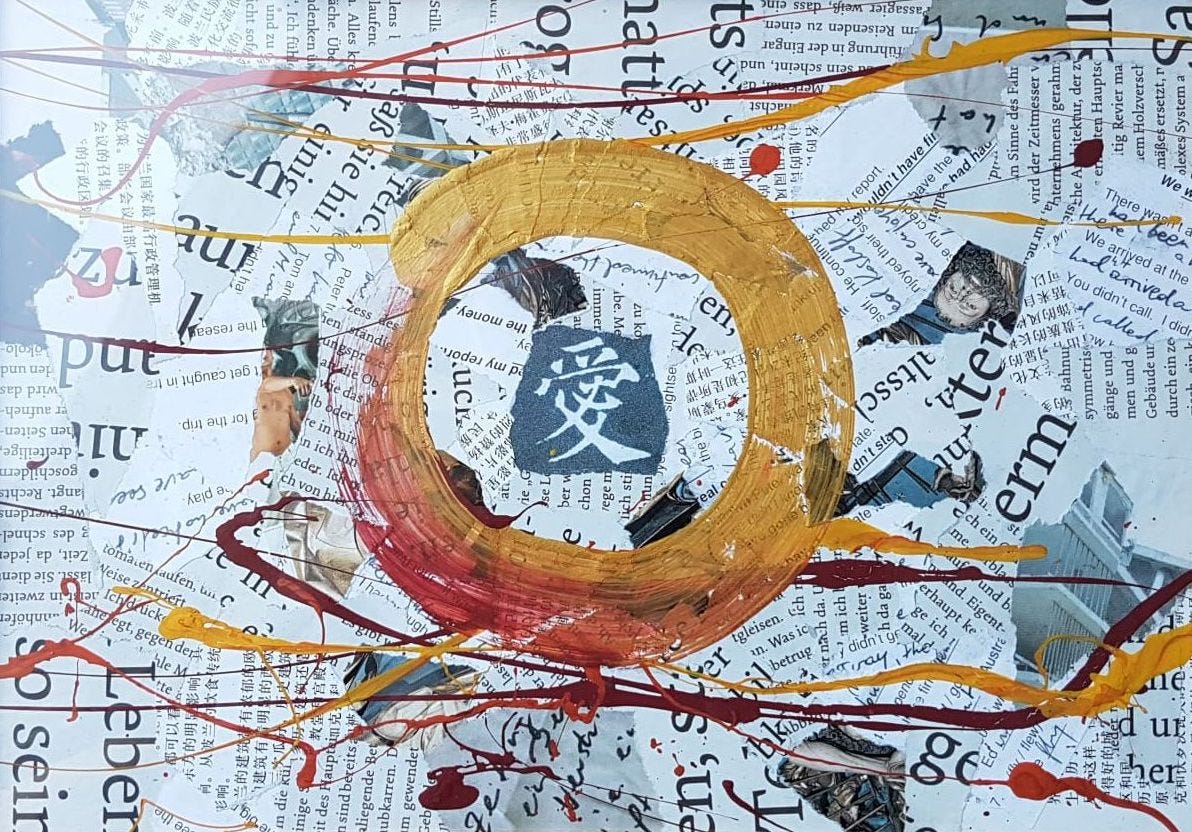
Where does your knowledge reside?
The most common answer to that question would probably be pointing to a space somewhere behind your eyes. And this wouldn’t be untrue. But in my experience, it’s a half-truth only, or maybe even just a thin slice of it.
Try to relax your face and let go of the focused gaze. Let the eyelids fall a bit lower, breathe out in a long audible fashion and relax your shoulders.
Stay with it for a moment and breathe. While you do that, feel the connection to the Earth and gravity that keeps you on it - maybe through your sit bones, maybe through your feet, maybe both - or through something else.
When I do that, the precise placement of my knowing becomes very fuzzy - and I’m not even sure if it’s fully contained within the boundary of my skin.
It’s always risky to ask oneself what knowledge is - what makes it out, what does it mean to “know” and how do we know what we know.
Even riskier to ask how does knowing actually feel.
One side of the risk involved in that question is the social expectation of CLARITY that is attached to the collectively constructed definition of “knowledge”. In the contemporary world, still haunted by the ghost of Descartes, we tend to talk about “knowledge” in a very strict, albeit - in a way - very comfortable manner: as something we can understand rationally and express within clear, linear, logical sentences. We maneuver between concepts and categories, arranging them in new ways, but we rarely leap too far out of familiar, established ways of knowing.
On one side, it’s not surprising - contemporary paradigms of science have been built on strict rules as to what counts as knowledge and why. Equally, socioeconomic dogma of rationalization, standardization, and measurable productivity doesn’t encourage excursions into things that don’t fit certain schemes.
There’s no doubt that some things in our world require clear and definite answers - especially in times plagued by fake narratives and conspiracy theories. At the same time, as John Law wonderfully expresses in the intro to his book “After Method”1, the world is rarely simple and coherent. Rather, it is complex, messy, ephemeral, slippery. I’d add: outrageously, wonderfully bizarre.
Just listen to contemporary quantum physicists, cosmologists, or even biologists talking about evidence-supported theories and discoveries from their fields of studies, and you’ll almost certainly find your neat concepts about reality thoroughly blown to pieces. The Universe doesn’t actually make that much sense to our usual way of thinking. Its scale alone exceeds anything we can tangibly imagine - before we even get to wondering about things it’s made of.2 And, as I see it, it’s not supposed to make sense. At least not to our rational, linear, linguistic mind. To assume that our concepts describe reality adequately is to mistake the stars reflected in a pond at night for those in the sky.3
When we insist on the pure clarity while trying to know and understand the world, we miss a lot of it. More than that: we actually erase and banish the incoherent parts of the world of our lived realities. Or we explain them away, distort and mutilate them in order to force them into clarity.4
And this is the point where we discover the deeper risk of asking questions about what it means to know: our understanding of “knowing” makes out the framework in which we define and secure our reality - like a fence around the little house in which we feel safe. There’s an invisible boundary between “knowledge” and things that don’t earn that status for us - and it defines the understanding of our being in this world. It sets the limits to our imagination. It determines the horizon of our perception and our thinking. And through that, it demarcates our possibilities of interacting with our world. It banishes certain things beyond our limits of knowing or not-knowing into the shadows - shadows we spend most of our lives trying to avoid.
And that’s why, in general, we tend to desperately hold to the belief that our concepts present an adequate description of the world. But we cannot learn things that go beyond our little world of certainty if we insist on sticking only to the tools, paradigms, and frameworks of knowledge creation we already consider legitimate.
Because of that, the question of what counts as knowledge, how we can know, or what does knowing mean, is always a question of curious bravery to go beyond the already known.
So, I want you to feel where your knowing resides. And please, do focus on the fuzzy edges.
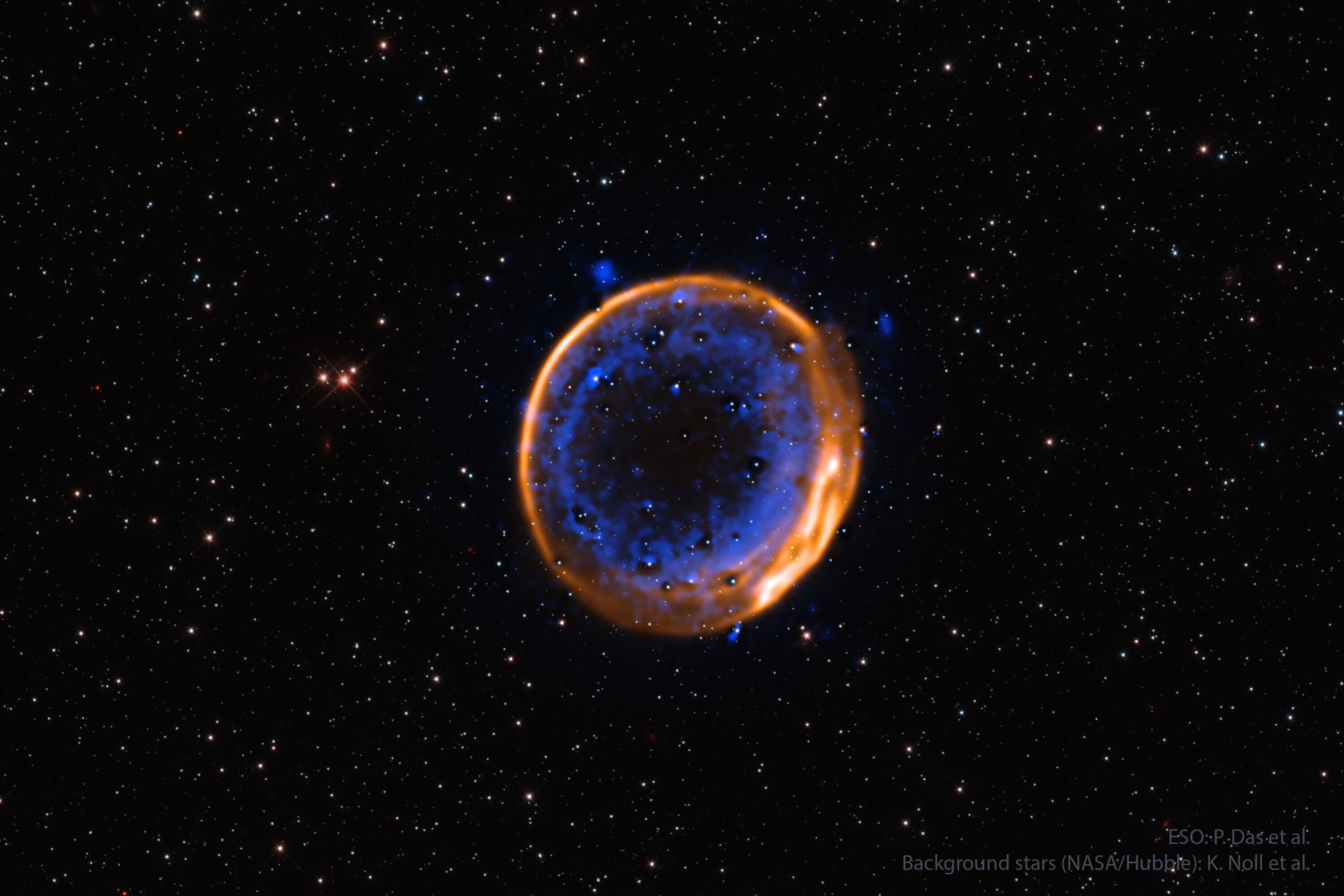
To be continued.
A few things to tingle your fuzzy
Meeting the Unknown through your body with Reggie Ray
Brian Cox talks about the Universe with childlike fascination
StarTalk at its craziest, or: Is the fabric of spacetime woven by tiny wormholes?
The awe-inspiring multi-generational mystery of monarch butterflies’ great migration, explained by Joe Hanson
“After Method: Mess in Social Science Research” (2004) is a fantastic intro to how Science and Technology Studies (STS) see the world, and a highly recommended reading - not only for (social) scientists.
“Normal” matter makes up only about 5% of the Universe. And we still don’t know what the remaining 85% is - scientists call it dark matter and dark energy. But basically, nobody knows yet what it is. Isn’t it fantastic?
This is another point made by the wonderfully outrageous researchers from the STS-corner - I’ll write more on that in the future, cause it’s one hell of a ride.
A metaphor I stole from Andrzej Sapkowski.